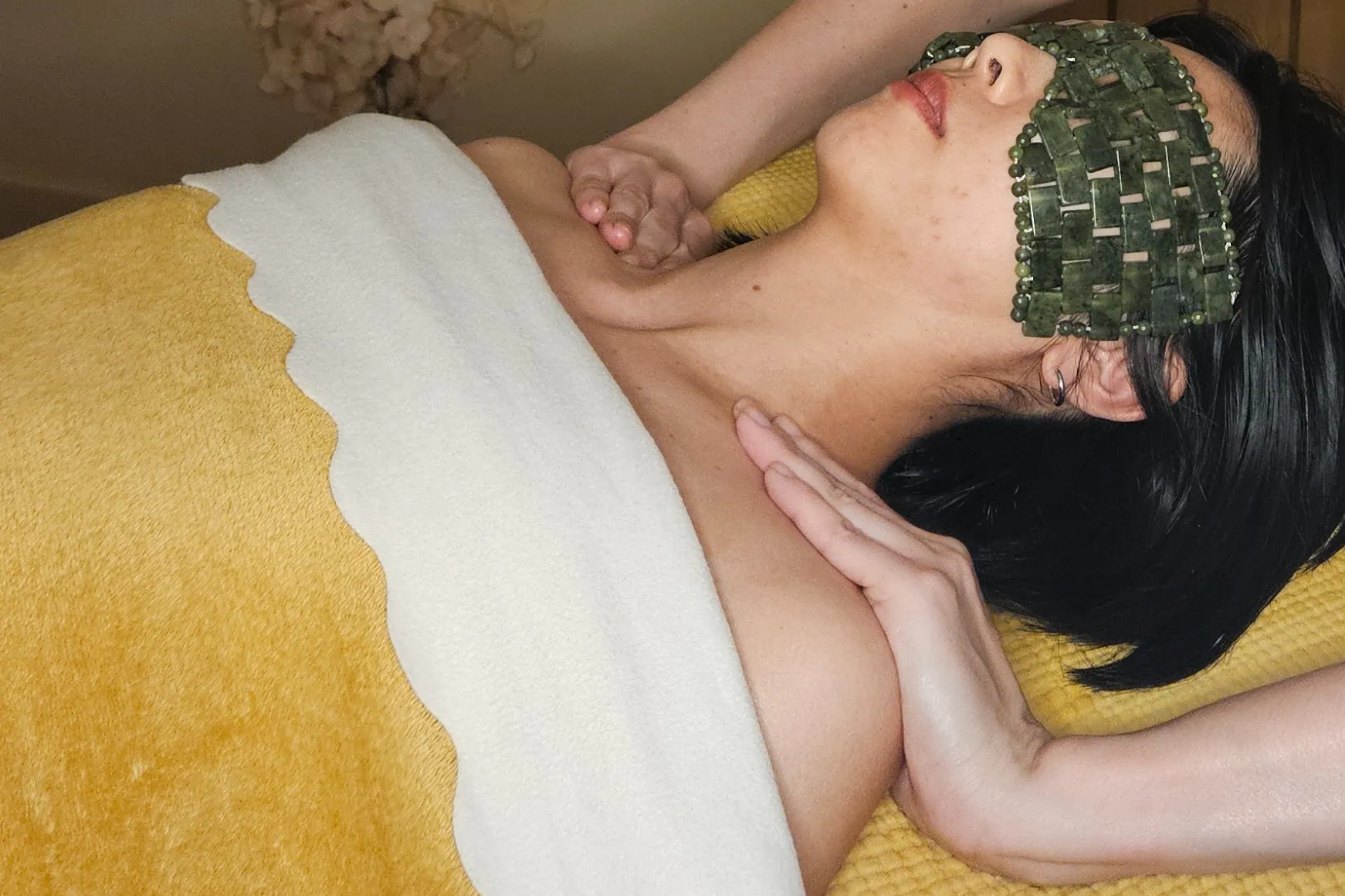
In this blog post we will explore what Manual Lymphatic Drainage massage is, how it feels, and how it can support women’s wellbeing.
What is Manual Lymphatic Drainage?
Manual Lymphatic Drainage (MLD) is a gentle, therapeutic massage technique designed to support the flow of lymph fluid around the body. It was originally developed to help people with chronic sinus issues and swollen lymph nodes. Since then, it has become widely used in clinical settings for post-surgical care and for conditions involving swelling, especially lymphoedema.
The lymphatic system is part of your body’s natural drainage and immune system. It helps collect excess fluid from your tissues and return it to your bloodstream, while also transporting waste products and supporting your body’s defence against infection. Unlike the circulatory system, which has your heart to pump blood around your body, the lymphatic system doesn’t have a pump. Instead lymph fluid is relies on things like muscle movement and deep breathing to keep it flowing. MLD works from the outside, using gentle, rhythmic movements to encourage the natural flow of lymph fluid.
In recent years “lymphatic massage” has become increasingly popular for supporting general wellbeing, and heavily promoted on social media as a way to detoxify, slim, sculpt or visibly reshape the body. While MLD can temporarily reduce puffiness and fluid build-up, it’s important to be clear that there is no evidence that lymphatic massages lead to a detoxification of the body or long standing changes to body shape.
How does MLD massage feel?
MLD doesn’t feel like a traditional massage. The pressure is very light as the lymph fluid sits just underneath the skin, and the movements are slow, repetitive and rhythmic. Minimal or no oil is used, as the gentle drag of the skin can help to move the lymph. Some people experience a flowing, tingling or warm sensation during the treatment, and due to the gentle and repetitive movements, most people find this treatment incredibly relaxing, you may even find yourself drifting off!
During a full-body treatment, the lymph nodes around the collarbones, neck, armpits and groin will be gentle stimulated using a gentle ‘pumping’ technique. Abdominal massage is also included, using gentle sweeping movements across the tummy area (not for pregnant clients).
After MLD, one of the most common thing I hear people say is ‘I feel lighter’.
So how can MLD can support women’s health?
There is growing research into the use of MLD in women’s health, although the strength of evidence varies and more research is needed.
MLD during pregnancy
Pregnancy can bring changes in fluid balance and swelling, particularly as pregnancy progresses. You may notice if you spend a lot of time sitting, or standing that fluid pools in your lower legs and feet, and MLD has been found to be an effective way of easing the discomfort from this swelling. MLD has also been found to be useful for treating symptoms of carpal tunnel syndrome, a common issue during pregnancy.
But there is something really important to mention here. While swelling can be common in pregnancy, a sudden increase in swelling, or a type of swelling that ‘pits’, particularly in the face, hands or feet can also be a sign of pre-eclampsia.
This is one of the reasons I feel strongly that pregnancy massage, especially MLD, should be carried out by someone who understands pregnancy, knows the red flags to look out for and what to do do if anyone presents with symptoms. If there are signs or concerns about pre-eclampsia, massage isn’t appropriate and the mum needs to be assessed by her maternity team. Not all swelling in pregnancy is simply something to massage away.
MLD after having a baby
Emerging research suggests that MLD is useful for reducing discomfort from postpartum swelling following both vaginal and abdominal births. It can also support the body’s inflammatory response during postnatal healing.
MLD can also be useful as part of post-operative recovery from a c-section birth. For some women, MLD can help with reducing the appearance of the c-section overhang if swelling and fluid are contributing to it, MLD techniques will be incorporated into c-section scar therapy appointments if indicated.
The postnatal period is a time when your body is adjusting and recovering after pregnancy and birth. Full-body MLD can be a lovely option if you’re looking for something gentle and restorative, particularly if you’re feeling puffy, swollen or sluggish.
MLD for general women’s wellbeing
MLD has an established role for use post surgery and for conditions involving swelling, but mixed and weak evidence for general women’s wellbeing. There are some suggestions from research that MLD may be useful for symptoms of perimenopause and menopause, however this area needs further understanding. What the evidence does tell us is that MLD massage caused no harm, and people report feeling relaxed, lighter and warmer following treatments.
So, when would you choose MLD?
You might choose MLD if you’re feeling puffy, bloated or heavy, or simply because you like the idea of a gentle and calming treatment.
I think it’s helpful to view MLD as a clinical or therapeutic massage technique. It can be useful when there’s a particular reason for choosing it, such as swelling or post-operative recovery. It works with the lymphatic system rather than the muscles, using very light, rhythmic movements. It’s also incredibly relaxing, which can feel particularly needed when your body has a lot going on behind the scenes.
If you’re looking for someone to work on tight shoulders, knots or deep muscular tension, a traditional massage would probably be a better choice. MLD may be more appropriate when you’re looking for gentle support, particularly during pregnancy, after having a baby or following surgery.
In Summary
MLD is a gentle, evidence-informed treatment that can play a meaningful role in recovery, particularly after surgery and in the postnatal period. Beyond that, it can offer an opportunity for rest and regulation.
There are lots of claims about MLD on social media, from detoxing the body and sculpting your shape, but these claims have not been substantiated. My approach to MLD is evidence -informed and centred on wellbeing, recovery and supporting the body.
If you have any questions about whether this is the right treatment for you, I’m always happy to guide you, just complete the contact form, or send me a message on social media and we can chat.