If you’ve given birth by C-section, you might have noticed a little pouch, shelf or overhang sitting just above your c-section scar and it’s something many women ask me about when they come for scar therapy. Lots of women think it is just something they have to put up with (like many scar related issues), but I’m here to tell you otherwise 🙂
So, why does it happen? And can anything be done about it?
The answer depends on what’s causing it. And this is where understanding your scar and your healing becomes really important.
Why do I have an ‘overhang’ above my C-section scar?
There isn’t a one-size-fits-all answer to this. The ‘overhang’ can be related to several different aspects of your postpartum recovery. Here are some of the things I look for when assessing a C-section scar and a few of the issues that can be contributing to the ‘overhang’.
1. Scar adhesions
During a C-section, several layers of tissue are cut and repaired. As your body heals, scar tissue forms. Sometimes, the tissues underneath and around the scar become less mobile, with layers sticking or adhering to one another. These are known as adhesions.
When this happens, the scar may become tethered to the underlying tissues. Rather than moving freely, it can feel tight, pulled in or restricted. This can create a shelf-like appearance, with the tissue immediately above the scar sitting or folding over it.
If scar adhesions are present you might also notice:
- A pulling or tight sensation when stretching or moving in certain ways.
- Skin that feels stuck or doesn’t glide easily.
- Indentations or areas that pull in along the scar
- Hip, lower back or pelvic pain
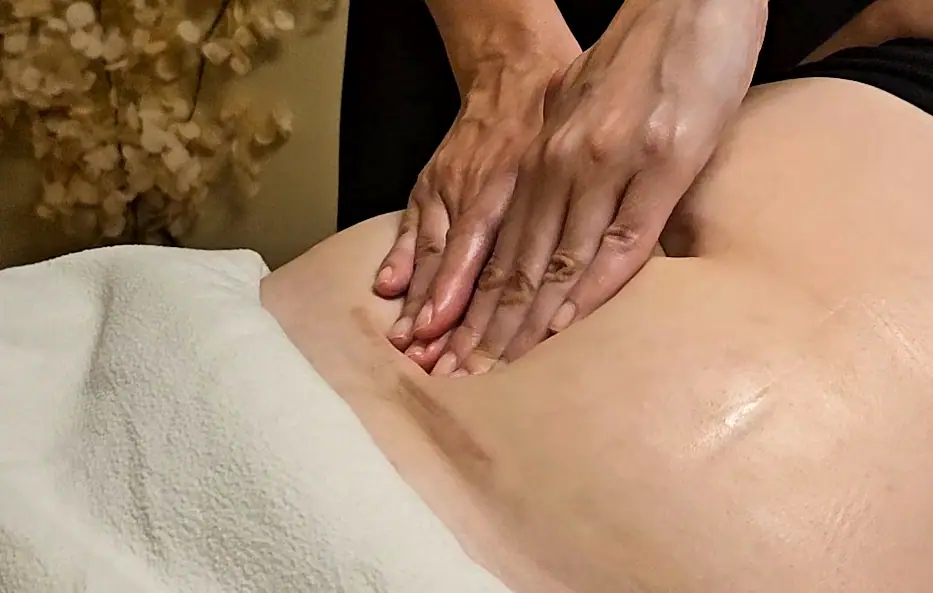
Specialist scar therapy and scar massage can help improve the mobility of the scar and surrounding tissues, addressing areas of restriction and tethering. Where these are contributing to the overhang, improving tissue mobility may also help soften its appearance.
2. Lymphatic fluid build-up above the scar
Your lymphatic system helps move excess fluid away from your tissues and back into your circulation. Lymph fluid from your belly button down primarily drains into the nodes in the groin. When you have abdominal surgery, some of the lymphatic pathways can be disrupted during the healing process, and the scar itself can sometimes cause a barrier, almost like a roadblock. Your body can develop alternative drainage routes, but sometimes fluid can accumulate in the surrounding tissues.
You might notice a soft, puffy or swollen area above your scar up to your belly button, rather than simply a fold of skin.
Scar mobilisation combined with manual lymphatic drainage can help to reduce this build up of fluid, subsequently reducing the appearance of an ‘overhang’.
4. Diastasis recti
During pregnancy, your growing baby stretches the abdominal wall and the connective tissue between the two sides of the rectus abdominis muscles stretches and widens. Sometimes this separation and reduced tension in the connective tissue persist after birth and is known as diastasis recti.
You may notice:
- A doming or bulging appearance when sitting up.
- A tummy that still looks pregnant months after birth.
- Reduced core strength or support.
- A feeling of disconnection in this area
As part of your initial appointment, I’ll look for signs that diastasis recti may be contributing to the appearance of your abdomen. If this is an issue, I can guide you with some gentle core connection and breathwork. You may also benefit from seeing a women’s health physiotherapist or a practitioner trained in diastasis rehabilitation.
Can I get rid of my C-section overhang?
This is probably the question I get asked most often, and the honest answer is: it depends on what’s contributing to it. It’s also worth knowing that the visible overhang can be one of the last things to change, but change is possible and I am here to help if you;d like me to.
If scar adhesions and restricted tissue mobility are part of the picture, specialist scar therapy can help improve how the tissues move and feel, and may soften the appearance of tethering.
If fluid retention is contributing, lymphatic drainage can help.
If abdominal muscle separation is a factor, targeted rehabilitation may be needed.
If the overhang is primarily due to excess skin or changes in body composition, massage won’t remove it.
Often, there isn’t just one contributing factor. You may have a combination of scar restriction, swelling and changes to your abdominal wall.
This is why identifying the underlying cause is so important.
The aim isn’t to promise a flat tummy, it’s to understand what’s happening and help address the things that can be improved.
How can C-section scar therapy help?
At In Touch, I offer specialist C-section scar therapy from The Retreat in Brundall, near Norwich.
As a registered midwife, health visitor and specialist c-section scar therapist, I bring together my clinical understanding of pregnancy, birth and postnatal recovery with specialist hands-on techniques (and I trained with the UK leading scar therapist!).
Your first appointment includes a detailed consultation and assessment. We’ll look at your scar, the surrounding tissues, how they move and whether there are signs of restriction, tethering or swelling. We’ll also talk about your symptoms and what you’d like to achieve.
From there, I can help identify whether scar therapy may be appropriate, whether lymphatic drainage might be beneficial, or whether another type of assessment or treatment would be more suitable.
Treatment is tailored to your individual needs. There’s no one-size-fits-all routine, and no pressure to commit to a course of appointments.
Curious about what might be causing your C-section overhang?
If you’d like to understand your scar better, I’d love to help.
I offer individual C-section scar assessments and specialist scar therapy at The Retreat in Brundall, near Norwich, you can even combine your scar therapy appointment with a massage. You can book both here 🙂